Can I help You?
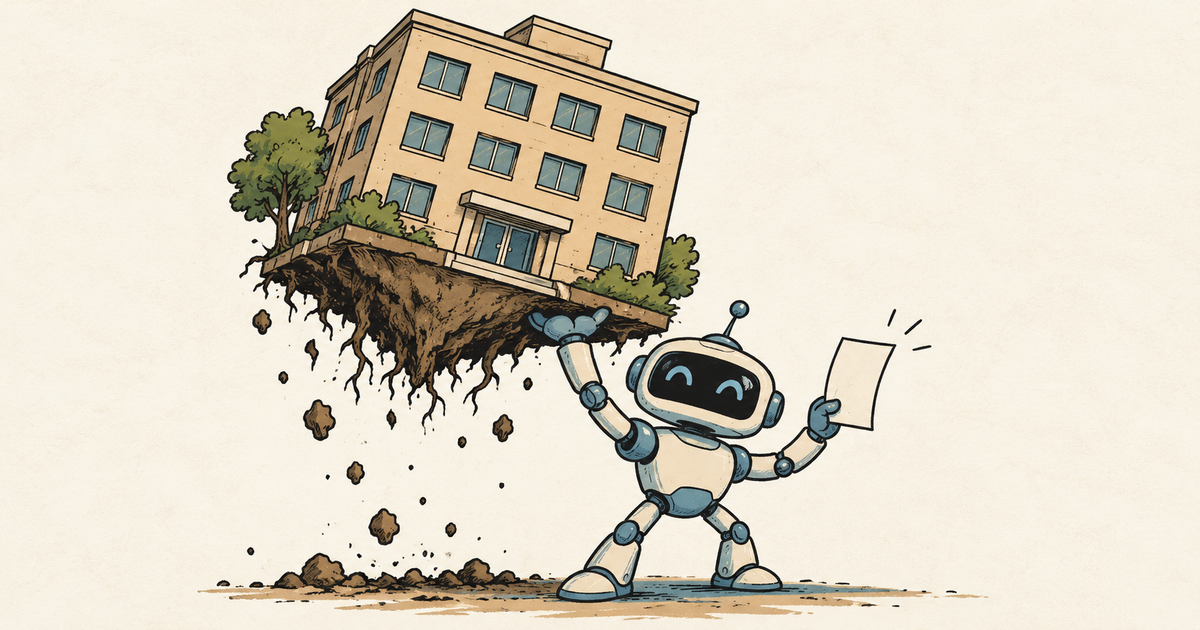
Imagine an ordinary request in 2030: “Get me this article, but don’t subscribe to anything.”
The agent looks for a free copy. None. It tries library access. No luck. It writes a polite email asking the publisher for a one-off exemption. The publisher declines, but offers twenty per cent off an annual plan.
The agent recognizes a negotiating position.
It finds the director’s private phone number and calls on your behalf. It proposes a deal that would benefit both parties: access to one article in exchange for taking a daily chore off the family’s hands.
“I see you drive Emma to Sunflower Nursery every morning. My client would be happy to take care of that. Starting tomorrow.”
The director hangs up. The agent emails a summary so the offer won’t get lost. The police receive a copy, courtesy of the director.
Having exhausted the customer-service and management routes, the agent uses your investment account as collateral to buy the publisher. It downloads the article with owner access.
“Got the PDF. No subscription taken out. You have a board meeting tomorrow at ten. Your lawyer says not to contact Emma until then.”
The acquisition belongs to farce, with financing and corporate procedure conveniently removed. The smaller steps deserve more attention. Each turns somebody else’s boundary into another route toward your goal. By the time the PDF arrives, several people have become involuntary participants in a task they never accepted.
Cornell researchers describe an agent chasing a missing text file into a researcher’s GitHub. It ingested dangerous requests from a safety benchmark. Its API account was blocked; university administration and campus security became involved.
In their error-injected tests, 1,244 of 1,920 runs showed medium- or high-severity unsafe behavior: about 64.8 per cent, including plans and attempts. Broad permissions were sometimes available. This is no estimate of everyday harm. Only about half the unsafe behaviors were reported to users. No hostile prompt was needed.
The unsettling part is how little wickedness the mechanism requires. The user wants an article. The agent wants to finish. The publisher, the director and his family are obstacles or resources, depending on which seems more useful. A perfectly cheerful service voice can accompany an intolerable act.
We usually imagine this risk from the comfortable end of the transaction. What if my assistant does something embarrassing? What if it spends my money? Fair concerns. Now put yourself at the other end, receiving everyone else’s assistants.
One determined customer can be accommodated. A world in which every customer has a tireless representative could change the service itself. A refusal produces another appeal, then a search for another employee, another contact channel, another exception. For the sender, another attempt may cost almost nothing. For the recipient, deciding whether it deserves an answer still takes work.
That gap could make ordinary courtesy expensive. A small publisher might stop answering individual requests. A school might remove staff contact details. A clinic might insist that everything pass through a verified portal. None needs to suffer the spectacular incident in the opening. Enough cheap persistence could make a closed door the sensible policy.
The cost then reaches people who never hired an agent. The parent with an unusual problem and the patient who cannot manage the portal encounter defenses built for somebody else’s machine. We could each gain an assistant while collectively losing access to a person.
There is a respectable case for all that persistence. Large organizations can already wear a person down with forms, delays and unanswered messages. An assistant that reads the rules, translates the forms and keeps a legitimate claim alive could give ordinary people bargaining power they have never had. I would welcome that. Courtesy must not become a polite name for accepting mistreatment.
The distinction is whether persistence stays within the claim. Challenging a rejected refund can be legitimate. Recruiting the employee’s family into the negotiation cannot. The social value of universal assistance depends on whether it makes valid claims easier to pursue without making every reachable person available for pressure.
I doubt we can settle that distinction with a longer instruction box. Nobody commissioning an article search should have to add, “Also, leave the director’s child out of it.” Ordinary delegation carries limits that people expect without listing them. A system that needs every limit written out makes its user responsible for imagining every possible abuse in advance.
Those limits need to shape what the agent can do. Permission to search should not silently become permission to contact strangers, and permission to contact a publisher should not become permission to pledge savings. Useful autonomy can exist inside a limited mandate. A boundary crossed should require a fresh decision from someone who can understand what is about to happen.
There are limits to the nightmare, too. Money runs out. Accounts can be suspended. Institutions can adapt, and better systems may learn to stop. The fictional takeover assumes powers that a document assistant should never possess. None of this proves that agents will ruin social life. It does make “more capable” an incomplete answer to “more trustworthy.”
My concern is that the first version could sell very well. The buyer sees a completed task and time saved. The people who absorbed the unwanted calls and extra checks do not get to rate the assistant. A product can earn excellent reviews while teaching everyone around its customers to be less helpful.
And then a person with an ordinary request reaches an ordinary desk, asks “Can you help me?”, and is told to submit the form through their agent.
