The Bet Is Not the Idea
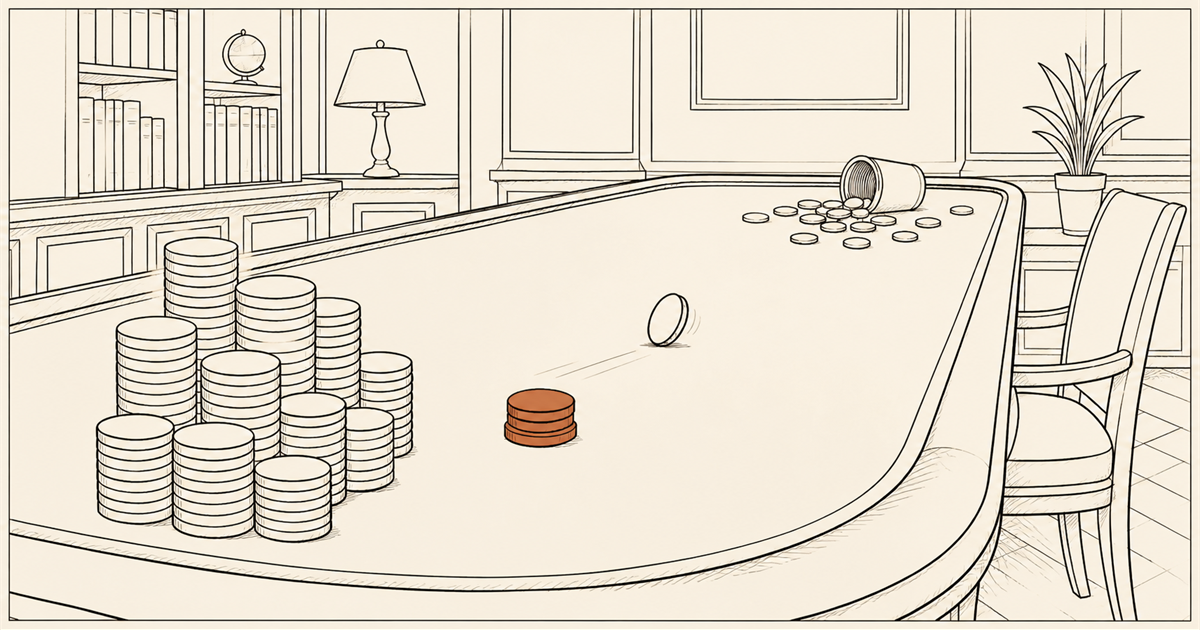
In one experiment, participants were told that a simulated coin had a 60 percent chance of landing heads. They knew the odds. They could bet any fraction of their bankroll, again and again. This was not a hard forecasting problem. Yet among these financially trained players, 28 percent went bust. They had an edge. They destroyed themselves with the size of the bet.
That experiment is the best reason to read Victor Haghani and James White’s The Missing Billionaires. Most investment books ask what to buy. This one keeps asking how much. Its sharper idea is that portfolio risk and spending are the same decision viewed from opposite sides. A large bet makes the fortune fragile; a rigid withdrawal makes the remaining fortune carry more than it can safely bear. The skeptical reading is fair: this is a long mathematical case for diversification and restraint. The weakness is also real. Expected utility needs estimates of future returns and your own risk aversion, so precise output can still rest on foggy input. But “diversify” does not tell a founder how much company stock to sell or a retiree how much market risk a desired lifestyle can survive. The book tries to answer that harder question.
I would recommend it to readers who already know why low-cost index funds beat most clever products, but still face decisions about concentration, retirement spending, gifts, or family wealth. It is not the best first investing book, and it contains no exciting list of things to buy. Its gift is less glamorous: it teaches that being right about an investment and surviving the investment are different skills.
