A Border Is an Amplifier
France and Germany did not discover, sometime after 1945, that they had secretly liked each other all along.
They changed the machinery between them.
In 1950, Robert Schuman proposed placing French and German coal and steel production under a common authority. The point was not sentimental. These were the materials of war. Pool them, inspect them and govern them together, Schuman argued, and another war would become “not merely unthinkable, but materially impossible.”
That is a peculiar way to manufacture friendship: start with blast furnaces.
But it reveals the first problem with asking which nations like one another. A nation has no single emotional organ. Its citizens may admire another country’s music, distrust its people, resent its history and support a military alliance with its government—all at once. The useful model is not one map but three.
There is a public map of warmth, stereotypes and familiarity. An official map of schoolbooks, memorials, apologies and inherited grievance. And a strategic map of borders, trade routes, alliances and threats. Sometimes the lines coincide. Often they do not.
A security partner may be culturally disliked. A cultural obsession may belong to a geopolitical rival. A former enemy may become an indispensable market decades before the jokes and family stories catch up. “Friendship between nations” is usually a temporary agreement among these three maps.
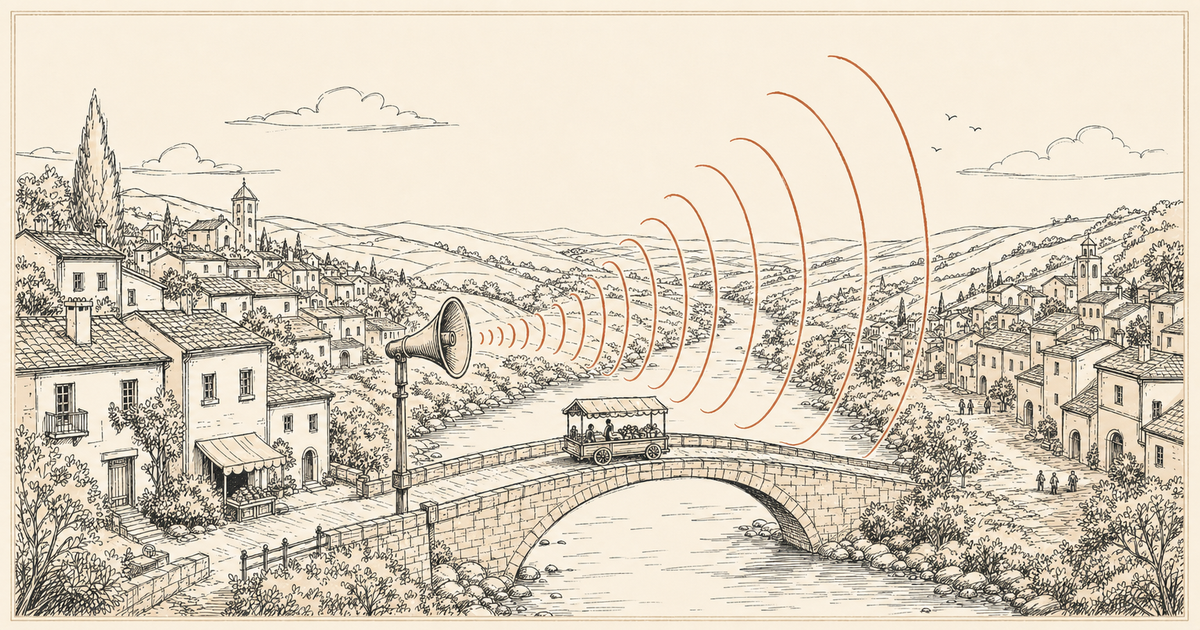
This also explains the cliché that neighbors hate one another. Sharing a border does not create hostility by itself. It creates density.
Neighbors have more things to contest: rivers, ports, minorities, roads, fishing grounds, names, maps and the location of yesterday’s frontier. They also have more chances to trade, commute, marry, learn each other’s language and discover that the monster across the line needs a plumber. A border is not a cause. It is an amplifier.
The war data show one half of that amplification. Political scientist John Vasquez began his 1995 study, “Why Do Neighbors Fight?,” from the long-known fact that most interstate wars occur or begin between contiguous states. But he rejected the easy explanation that neighbors fight merely because they can reach each other. Territory matters in its own right.
A piece of land can be useful, sacred and autobiographical at the same time. It may contain a port or oil field, command a mountain pass, hold ancestral graves and appear in the national origin story. A tariff can be divided. Sovereignty over one valley cannot. This is why territorial disputes so easily pull the strategic and official maps into alignment: the army sees a position; the textbook sees a wound.
Then the security dilemma adds motion. In Robert Jervis’s classic formulation, one state can make itself safer in ways that make another state less safe. A defensive fortification looks like preparation for attack from the other side. An alliance purchased as insurance looks like encirclement. Each side can sincerely say, “We are only responding,” while jointly building the danger to which both are responding.
That mechanism does not require ancient hatred. It can generate the evidence that hatred later cites.
Psychology supplies a different layer. In Henri Tajfel’s minimal-group experiments, people favored their own side in allocating real rewards even when the groups had been created by an almost meaningless classification and had no prior conflict. The original 1971 paper was disturbing precisely because so little was needed. A border in the mind could appear before anyone had stolen a province.
Sigmund Freud gave the more famous label to the special irritation between near-relatives. In Civilization and Its Discontents, he called it the “narcissism of minor differences”: adjacent communities with much in common using small distinctions as outlets for hostility and as glue for internal solidarity. The phrase survives because it recognizes a social paradox. Difference does not always become less important when it becomes smaller. Sometimes small differences must carry more weight because they are all that keep “us” from dissolving into “them.”
But Freud offered a lens, not a law.
Similarity cannot tell us whether two nations will become affectionate cousins or rival owners of the same inheritance. A shared language can make jokes travel and insults legible. A diaspora can be a bridge of family ties or be portrayed as a fifth column. A common religion can provide solidarity or turn a doctrinal distinction into the last defensible wall of identity.
The question is not whether two populations are similar. It is what political work the similarity is being asked to do.
This is where the official map matters. Historical memory is not a warehouse from which societies retrieve fixed facts. It is an active selection system. Governments and institutions choose which defeat gets a holiday, which atrocity gets a museum, which old border appears behind the news anchor and which apology counts as sufficient. Political entrepreneurs rarely invent grievance from nothing. More often they select a file from the archive, declare it the key to the present and teach citizens which neighbor completes the story.
Power makes this relationship uneven. A small country may define an era of its politics against a giant next door while barely appearing in the giant’s public imagination. On one side there is resentment; on the other, indifference. The indifference can hurt more. It converts asymmetry into condescension: our central trauma is your footnote.
If these mechanisms built rivalry, what reverses it?
Not contact alone. Bad contact can rehearse hierarchy. Tourists, occupying armies and exploited migrant workers all meet foreigners. Yet the broad evidence still matters: Thomas Pettigrew and Linda Tropp’s meta-analysis covered 713 independent samples from 515 studies and found that intergroup contact typically reduced prejudice. The more promising contact is repeated, cooperative, relatively equal and supported by institutions. It gives people experiences that cannot be fitted so easily into the inherited stereotype.
The international equivalent is not simply commerce. Trade raises the price of conflict, but dependence can also feel like a weapon waiting to be used. Durable rapprochement needs procedures that make intentions visible and defection costly.
Argentina and Brazil built an unusually literal version. Their nuclear programs had generated suspicion and regional competition. Beginning with a 1980 cooperation agreement, the two states gradually exchanged information, created reciprocal mechanisms and, in 1991, established the Brazilian-Argentine Agency for Accounting and Control of Nuclear Materials. The agency’s official history describes the sequence as a process of generating trust. That wording is exact. Trust was not the prerequisite for verification. Verification helped produce trust.
France and Germany followed the same deeper logic with different machinery. Coal and steel did not make French and German citizens warm to one another by chemical reaction. Joint governance changed the strategic map; repetition changed expectations; schools, ceremonies and generations slowly revised the official and public ones. Reconciliation was not forgetting. It was the construction of a system in which every new disagreement did not automatically reopen the complete archive of injury.
This gives us a rough predictive pattern.
Antipathy grows when the three maps reinforce one another: a live material dispute, an identity boundary and an elite willing to activate memory. Affinity grows when interests repeatedly reward cooperation, institutions reveal intentions, contact complicates stereotypes and leaders stop treating every compromise as betrayal. Indifference dominates where there is little contact, little strategic consequence and no historical story useful enough to remember.
None of these outcomes is permanent. A shared threat can turn rivals into allies and its disappearance can expose the old fracture. Popular culture can warm the public map while governments remain opposed. A new war can realign all three overnight.
And there is a final uncomfortable possibility. Perhaps France and Germany did not abolish the psychology Freud described. Perhaps European identity merely drew a larger circle around them and moved the emotionally useful outsider beyond it.
Can a community weaken the need for a hostile neighbor without finding a more distant stranger to perform the same job?
That is the question hidden inside every successful reconciliation. The border may go quiet. The amplifier is still plugged in.
